Tropes vs Genre Convention: What’s the Difference?
Trope vs Genre Convention: What Every Writer Needs to Know
These terms are often used interchangeably, especially in writing advice circles. But they mean very different things. Understanding that difference can strengthen your story, sharpen your reader experience, and help you meet genre expectations without slipping into predictability.
Whether you are writing romance, crime, or psychological thrillers, knowing how tropes and genre conventions work together gives you a better chance of creating fiction that feels satisfying, compelling, and market-aware.
Why this matters: if a manuscript feels close but not quite there, the issue is often not talent or originality. It is usually a mismatch between what the story is doing and what the reader expects from that genre.
Quick Answer: Trope vs Genre Convention
A trope is a familiar storytelling device, such as enemies to lovers or the unreliable narrator. A genre convention is a core expectation of a genre, such as a solved mystery in crime fiction or a satisfying emotional payoff in romance.
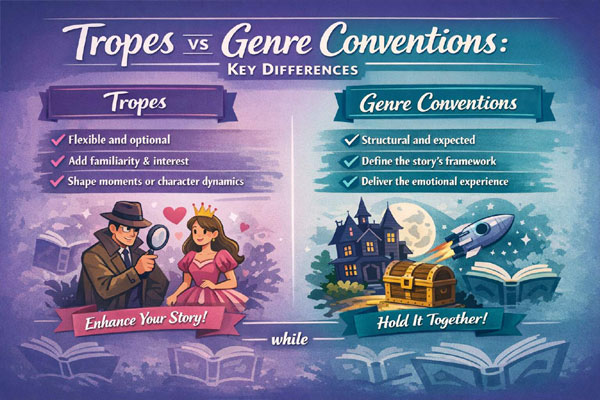
- Tropes are flexible and optional
- Genre conventions are structural and expected
- Tropes add flavour and familiarity
- Genre conventions shape the reader’s overall experience
In simple terms: tropes decorate the story, while genre conventions hold it together.
What Is a Trope in Fiction?
A trope in fiction is a recognisable, recurring storytelling device. It could be a character type, relationship dynamic, plot setup, or theme that appears across many stories.
In simple terms, tropes are familiar patterns that readers instantly recognise.
Common examples of tropes
- Friends to lovers
- Enemies to lovers
- The unreliable narrator
- The lone wolf protector
- The mad scientist
You will see these everywhere. Many contemporary romances build around the enemies to lovers trope, where friction and conflict gradually shift into attraction. Psychological thrillers often rely on the unreliable narrator to keep readers questioning what is true.
Tropes work as shorthand. You do not need pages of explanation because readers already understand the emotional or narrative pattern behind them.
Why tropes matter
Tropes help you build connection quickly, create emotional engagement, and establish expectations with minimal effort. For example, placing a grumpy character opposite a sunshine character signals a dynamic that many readers immediately understand and enjoy.
What Are Genre Conventions in Fiction?
Genre conventions are the essential elements that define a category of fiction. They include structure, character roles, key events, tone, and the emotional payoff readers expect when they pick up a particular type of book.
If you picked up a crime novel and there was no mystery to solve, you would likely feel that something important was missing. Readers come to genres with expectations, and conventions are part of the promise the book makes to them.
Examples of genre conventions
- Romance: a central relationship and a satisfying emotional resolution
- Crime fiction: a mystery, a trail of clues, and a clear solution
- Thrillers: rising tension, growing danger, and a high-stakes climax
Think of genre conventions as the framework your story is built on. They are not decorative extras. They are often what make readers feel the book delivered what they were hoping for.
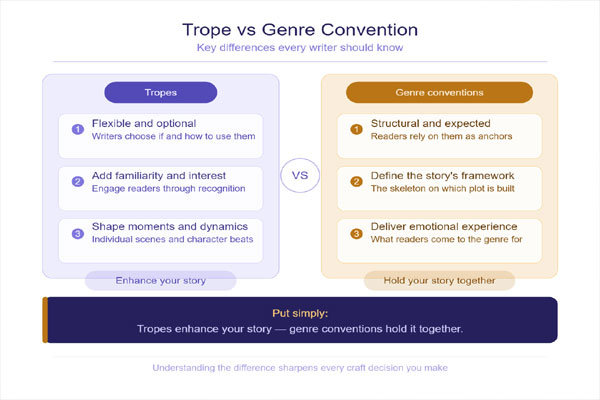
Trope vs Genre Convention: Key Differences
Tropes
- Flexible and optional
- Add familiarity and interest
- Shape moments, characters, or relationship dynamics
- Can be layered, combined, or subverted
- Example: fake dating in a romance novel
Genre Conventions
- Structural and expected
- Define the story’s framework
- Deliver the emotional experience readers want
- Anchor the book within its genre
- Example: revealing who committed the crime in a mystery novel
Put simply: tropes enhance your story, while genre conventions hold it together.
Why This Matters for Writers
If your story is not quite working, the problem is rarely that you have used too many tropes. More often, it is because key genre conventions are missing, weak, or underdeveloped.
- A romance might include popular tropes such as friends to lovers, but without the emotional payoff readers expect, it can feel incomplete
- A thriller may use an unreliable narrator, but without rising tension, it will struggle to keep readers turning the pages
- A crime novel might feature a brilliant detective, but without a clear solution, it can leave readers frustrated rather than satisfied
Readers may not always know the technical language behind these issues, but they will notice when something feels off.
Writer reminder
If your manuscript feels flat, the issue may not be originality. It may be that the structure has not yet delivered what your genre promises.
How to Use Tropes Without Sounding Clichéd
You do not need to avoid tropes. In fact, readers often seek them out. The key is to use them with intention, depth, and emotional truth.
- Add depth to familiar character dynamics
- Combine tropes in unexpected ways
- Subvert expectations where it serves the story
- Focus on voice, tone, and emotional authenticity
For example, a lone wolf protector becomes more interesting when emotional vulnerability or conflicting motives are brought into the story. A familiar trope starts to feel fresh when it is grounded in character rather than formula.
A practical way to think about it
Readers do not reject tropes because they are familiar. They reject them when they feel lazy, shallow, or disconnected from the emotional core of the story.
Final Thoughts: Writing Stories Readers Love
Genre conventions are the promise you make to your reader.
Tropes are the tools you use to deliver on that promise.
When you understand both, you can write stories that feel familiar but never dull, satisfying without being predictable, and engaging from the first page to the last.
That is where strong storytelling starts: not by avoiding what readers know, but by understanding why it works.
FAQs About Tropes and Genre Conventions
What is the difference between a trope and a genre convention?
A trope is a familiar storytelling device, such as enemies to lovers or the unreliable narrator. A genre convention is an expected structural element within a genre, such as a solved mystery in crime fiction or a satisfying emotional resolution in romance.
Are tropes necessary in fiction writing?
Not always, but they are often useful. Tropes help readers quickly recognise character dynamics, themes, and narrative patterns, which can make your story feel more engaging and accessible.
Can you use tropes without sounding clichéd?
Yes. The best way to avoid cliché is to bring depth, originality, and emotional honesty to familiar ideas. A trope becomes tired when it is copied mechanically rather than shaped around believable characters and meaningful conflict.
What are examples of genre conventions in fiction?
Examples include a central love story and satisfying ending in romance, a mystery and solution in crime fiction, and escalating suspense in thrillers. These conventions help readers feel that the book delivered the experience they expected.
Why do genre conventions matter to readers?
They matter because they shape reader expectations. When conventions are missing or poorly handled, readers may feel the story is disappointing, even if the writing style itself is strong.
Need Help Strengthening Your Story?
Whether you are working on a romance, thriller, or crime novel, I offer supportive, practical editing with a coaching style to help you move forward with clarity and confidence.
I can help you strengthen your structure, sharpen your storytelling, and make sure your manuscript delivers what your readers are hoping for.
Stay in the loop
Get editing insights, writing guidance, and practical support for your manuscript journey.